
GlossaryArticle
What is an agent-ready website? agents.md and llms.txt explained
An agent-ready website is built so AI agents can read, understand and act on its content — not just humans. It comes down to semantic HTML, schema.org, llms.txt, agents.md and clean APIs. Here is what each part does, why it decides whether AI cites you, and how Citation Sites are built agent-ready from the start.
Published approx. 3 min read
In this article+–
Curious how AI talks about your brand?Run a free visibility check
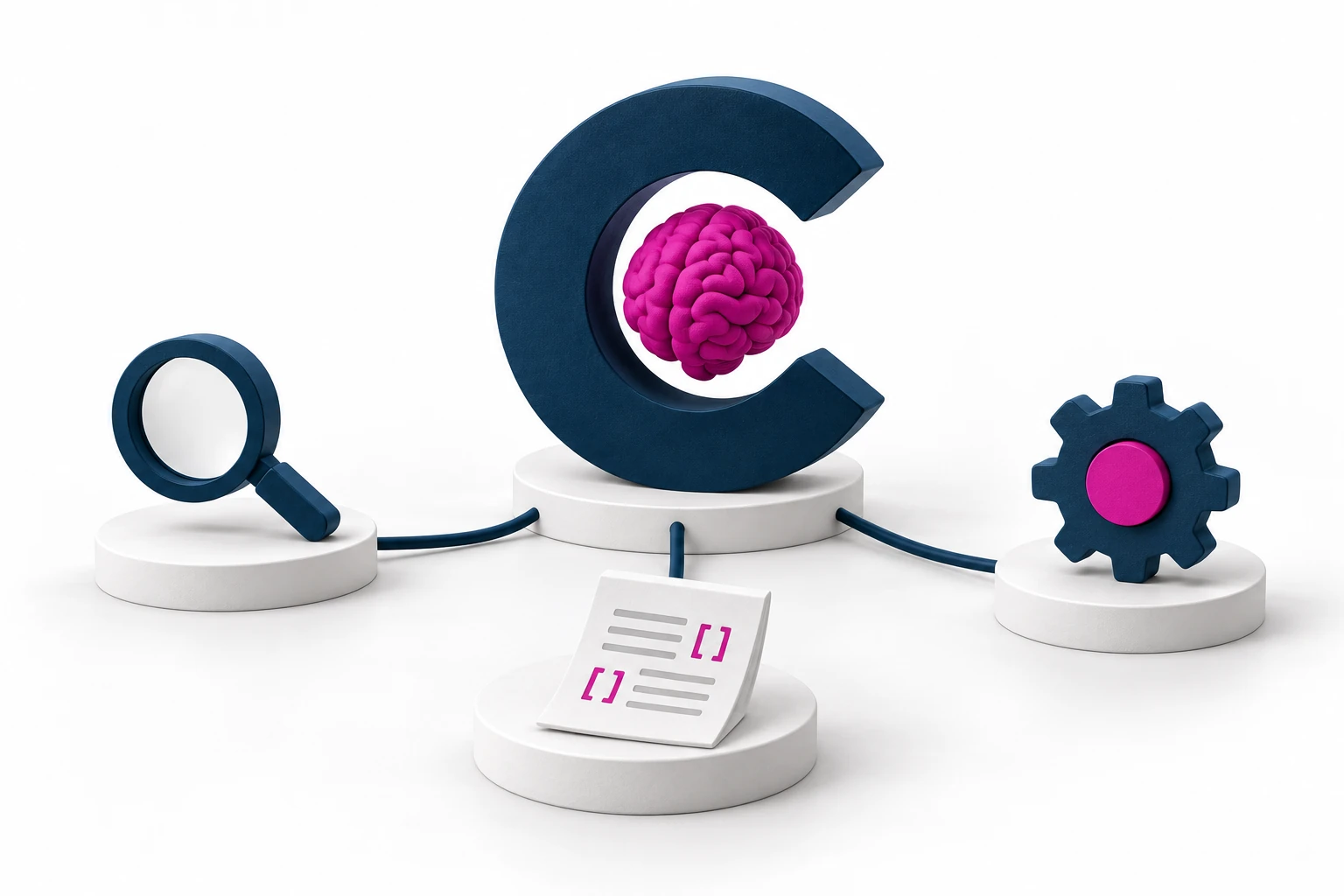
An agent-ready website is built so AI agents can read, understand and act on its content — not just human visitors. Where a regular website is optimized for eyes and clicks, an agent-ready website gives machines a clean, predictable surface to route on. The building blocks are semantic HTML, schema.org, llms.txt, agents.md and clean APIs.
What makes a site agent-ready
- Semantic HTML — the right elements for headings, lists, articles and navigation, so the structure is unambiguous to a machine.
- Schema.org — structured data that tells the agent what the content is: product, article, organization, FAQ.
- llms.txt — a focused entry point that points agents to the most important content, without navigation, footers and styling.
- agents.md — instructions, context and conventions for agents working with your surface.
- Clean APIs — predictable, documented interfaces agents can call directly instead of scraping HTML.
agents.md and llms.txt: what is the difference?
The two are often confused. llms.txt is a general, machine-readable entry point to a website's content — it tells an agent what exists and where the most important parts are, so it does not have to wade through navigation and footers to find them. agents.md is more of an instruction document: context, conventions and commands, originally for code agents in a repository. In 2026 agents.md is read natively by Claude Code, OpenAI Codex, Cursor, GitHub Copilot, Gemini CLI and others, and appears in tens of thousands of repositories. In short: llms.txt describes what; agents.md explains how.
Why it matters for AI visibility
A growing share of discovery and decisions runs through agents that fetch, interpret and recommend on the user's behalf — related to AI agents and Answer Engine Optimization (AEO). If your content is messy for machines, you get passed over for sources the agent understands better. An agent-ready website is therefore not a technical detail but the difference between being cited or overlooked in AI-driven answers.
How CitationLab builds agent-ready websites
Citation Sites are built agent-ready from the start: semantic HTML, rich schema.org structure, and ready-made llms.txt and agents.md so both AI crawlers and agent interfaces have something solid to pull. CitationLab itself publishes agents.md and llms.txt for its own surfaces, and additionally exposes an MCP server for AI Marketing Manager. Want to check whether your website is ready for the agents? Start with a review of your AI visibility.
Frequently asked questions
What is an agent-ready website?
An agent-ready website is a site built so AI agents can read, understand and act on its content, not just human visitors. It is achieved with semantic HTML, schema.org structured data, llms.txt, agents.md and clean APIs that give the agent a predictable, machine-readable surface.
What is agents.md?
agents.md is a standardized markdown file that gives AI agents instructions, context and conventions. It is like a README written for machines. In 2026 it is read natively by Claude Code, OpenAI Codex, Cursor, GitHub Copilot and Gemini CLI, among others, and appears in tens of thousands of repositories — the closest the industry has to a universal agent instruction format.
What is the difference between llms.txt and agents.md?
llms.txt is a general, machine-readable entry point to a website's content — a clean route agents can follow without wading through navigation and footers. agents.md is more of an instruction document with context, conventions and commands, originally for code agents in a repository. llms.txt describes what exists; agents.md explains how to work with it.
Why should my website be agent-ready?
Because a growing share of traffic and decisions runs through AI agents that fetch, interpret and recommend on the user's behalf. If your content is messy for machines, you get passed over for sources the agent understands better. An agent-ready website makes you easier to cite, recommend and transact with.
Key terms
Definitions used in this article
- Agent-ready website
- An agent-ready website is a site built so AI agents can read, understand and act on its content — with semantic HTML, schema.org, llms.txt, agents.md and clean APIs.
- agents.md
- agents.md is a standardized markdown file that gives AI agents instructions, context and conventions — a README written for machines. It is read natively by many AI agents and coding tools.
- llms.txt
- llms.txt is a file on a website that gives AI agents a focused, machine-readable entry point to the most important content, without navigation, footers and styling that would otherwise fill the model's context window.
Was this page helpful?