
GlossaryArticle
What is an AI agent? Agentic AI explained
An AI agent is a system that plans, uses tools and completes multi-step tasks toward a goal — unlike a chatbot that just answers one question at a time. Here is what agentic AI actually is, how autonomy varies, and why it changes how brands get discovered and recommended.
Published approx. 3 min read
In this article+–
Curious how AI talks about your brand?Run a free visibility check
An AI agent is an AI system that plans, uses tools and completes multi-step tasks toward a goal — unlike a chatbot, which answers one question at a time. Where a chatbot talks, an agent does: it takes a goal, makes a plan, calls tools and APIs, checks the results and adjusts until the task is done. This is the core of what is called agentic AI.
How an AI agent works
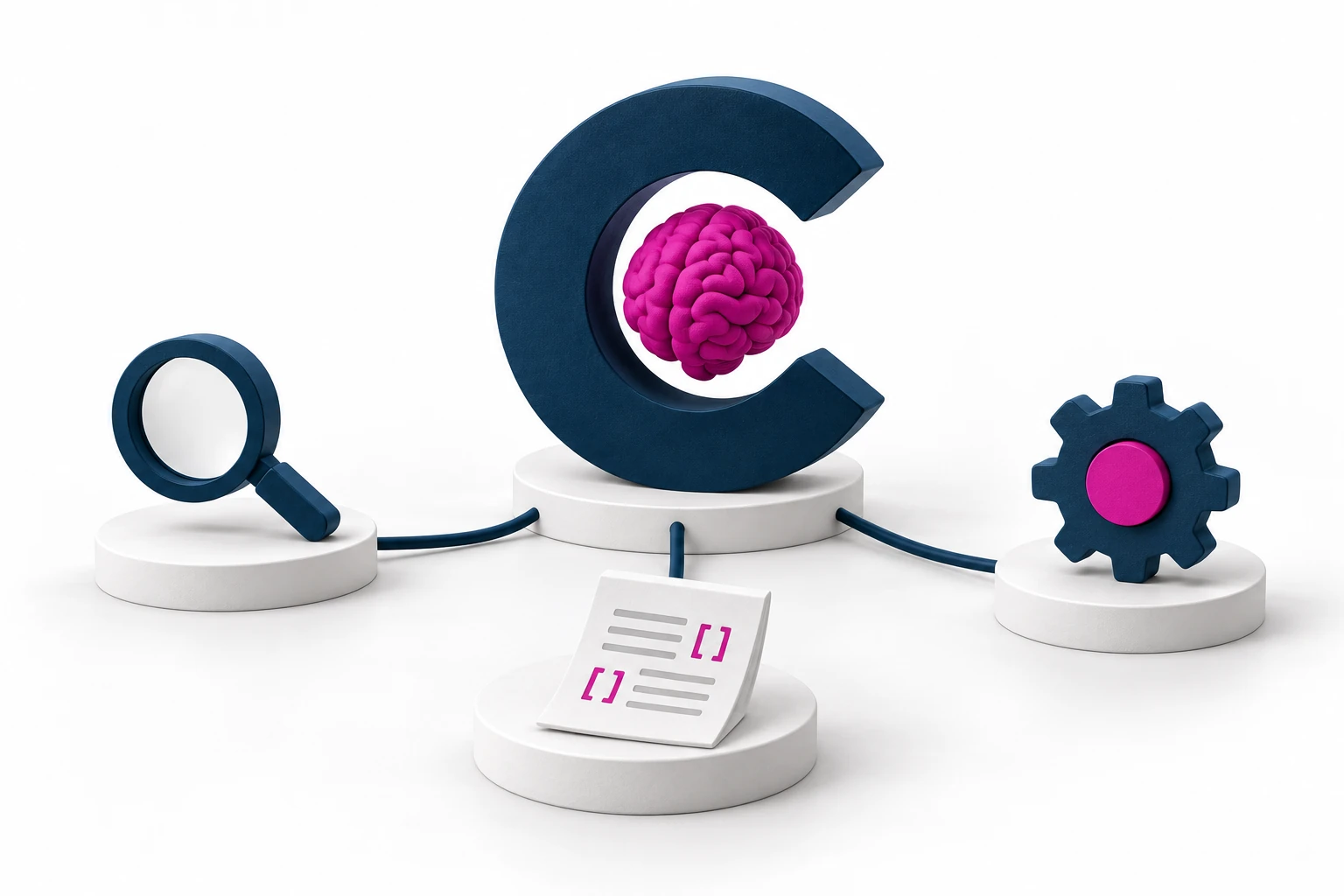
A working agent architecture typically has four parts operating in a loop:
- Perception — it ingests data from APIs, documents, databases or live sources to understand the situation.
- Reasoning and planning — it decides the next step based on the goal and context.
- Tool use — it calls external services, systems or other agents to take the action.
- Feedback loops — it checks the outcome and adjusts its behavior before moving on.
It is this loop — plan, act, evaluate, repeat — that separates an agent from a model that merely generates text.
Autonomy levels: from copilot to autopilot
Autonomy is not on/off but a spectrum. Copilot agents (like coding assistants) suggest and augment human decisions — you decide. Autopilot agents act on their own toward the goal without step-by-step approval. Multi-agent systems coordinate several specialized agents that divide the work between them. The higher the autonomy, the more important safety, control and a clear audit trail of what the agent actually did become.
Agentic search and commerce
In 2026 agents are in production: they ship code, run literature reviews, control browsers, automate support and orchestrate business processes. Two developments matter most for brands. Agentic search: the agent researches across many sources and synthesizes an answer — related to the shift toward agentic commerce. Agentic commerce: the agent discovers, evaluates and buys products on the user's behalf. In both cases, it is the agent's understanding of you that decides whether you get chosen.
How CitationLab measures this
CitationLab AI Marketing Manager tracks precisely how AI agents and AI models cite, mention and represent your brand across ChatGPT, Gemini, Perplexity and Google AI. You see Share of Voice against competitors, which questions AI actually answers, and whether the portrayal of you is accurate. As agents make more of the research and buying decisions, this is the insight that tells you whether you are even in the running.
How others can prepare
Make your brand readable and actionable for agents: structured data, clear entities, machine-readable product and service facts, and content that answers the questions an agent asks precisely. Then the agent has something concrete to pull when it plans on the user's behalf. Want to see how agents portray you today? Start with a review of your AI visibility.
Frequently asked questions
What is an AI agent?
An AI agent is an AI system that plans, reasons, uses tools and chains actions autonomously to reach a goal. Unlike a plain chatbot, which answers one question, an agent breaks a task into sub-steps, calls external tools, checks the outcome and adjusts until the goal is met.
What is the difference between an AI agent and a chatbot?
A chatbot answers what you ask, one question at a time. An AI agent takes a goal and works toward it on its own: it makes a plan, calls tools and APIs, evaluates the results and repeats until the task is done. The chatbot talks; the agent does.
What does agentic AI mean?
Agentic AI is a generation of AI systems capable of planning, reasoning, using tools and chaining actions autonomously to reach a defined goal — without a human approving each step. The term covers everything from coding assistants to commerce agents that buy on your behalf.
Why do AI agents matter for my brand?
Because agents increasingly discover, evaluate and recommend products and services on the user's behalf. When an agent does research or shops for the customer, it is the agent's understanding of your brand that decides whether you make the shortlist. That means you have to be visible and correctly represented to the agent, not just in traditional search.
Key terms
Definitions used in this article
- AI agent
- An AI agent is an AI system that plans, uses tools and completes multi-step tasks toward a goal, unlike a chatbot that answers one question at a time.
- Agentic AI
- Agentic AI is AI systems that can plan, reason, use tools and chain actions autonomously to reach a goal, without a human approving each step.
- Tool use
- Tool use is when an AI model calls external services, APIs or other agents to take an action — such as searching, calculating or buying — as part of solving a task.
Was this page helpful?