
GlossaryArticle
What is Deep Research? The AI that does the research for you
Deep Research is the agentic research mode in ChatGPT, Gemini and Perplexity: instead of one quick answer, the AI writes a research plan, searches widely, reads dozens of sources and produces a long, cited report. Here is how it works, and why it makes being citation-worthy more important than ever.
Published approx. 3 min read
In this article+–
Curious how AI talks about your brand?Run a free visibility check
Deep Research is the agentic research mode in modern AI assistants. Instead of answering you in seconds, the AI does something quite different: it writes its own research plan, runs many searches across multiple steps, reads dozens — sometimes hundreds — of web pages, and synthesizes it all into a long, structured report with citations. You ask for one answer; the AI conducts a small investigation.
How Deep Research works
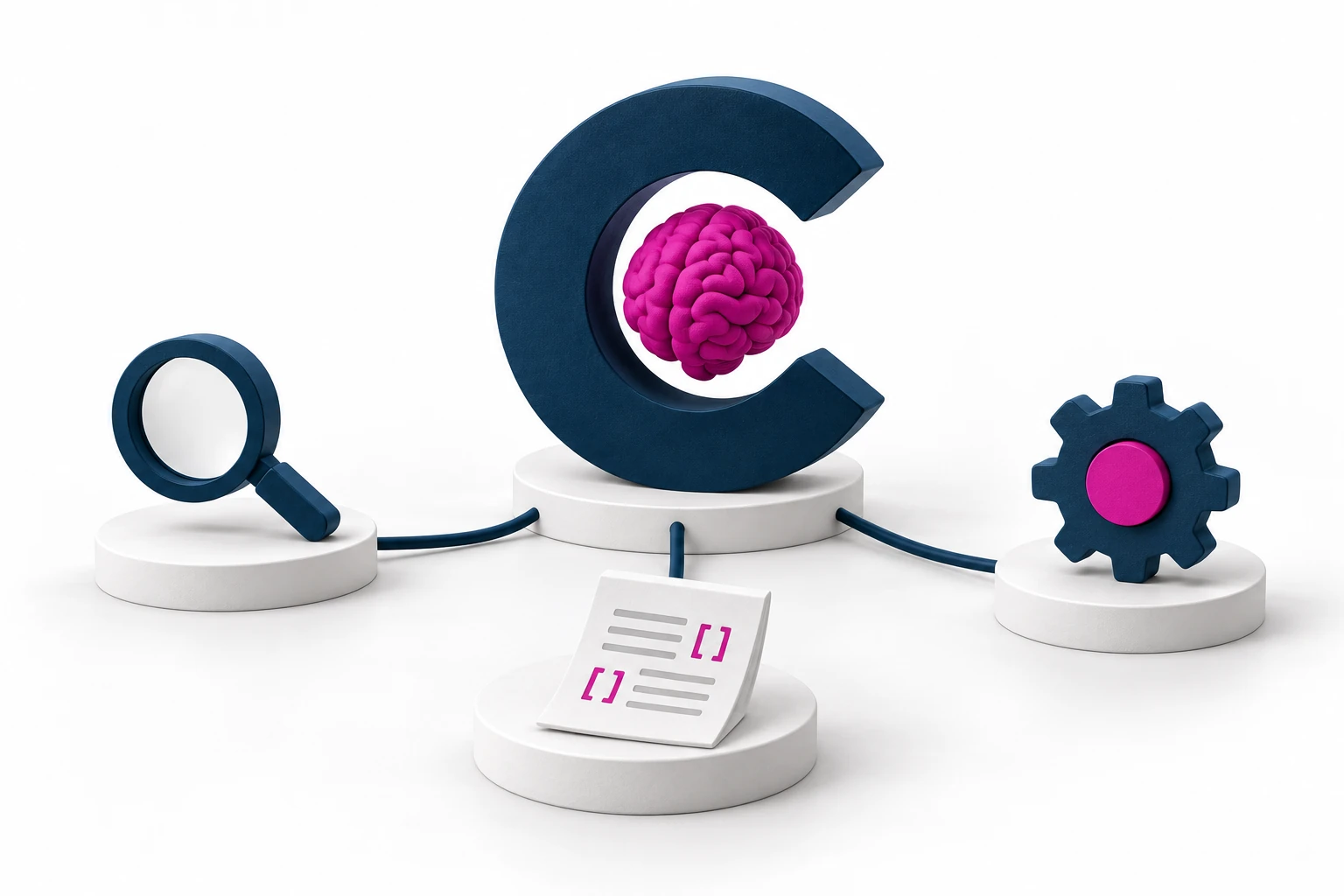
A Deep Research run is agentic: it steers itself through multiple steps. First the model breaks the task into sub-questions and writes a plan. Then it searches widely, retrieves and reads the pages it finds, updates its understanding as it goes, and searches again to fill gaps. Finally it writes a coherent report — often several thousand words — with citations attached to the claims. It is the same query fan-out logic that drives AI search, turned up into a full investigation.
Where it lives: ChatGPT, Gemini and Perplexity
In 2026 Deep Research is standard in ChatGPT, Gemini and Perplexity — and also available in Claude and Grok. The tools differ on the balance between speed and depth:
- Perplexity Deep Research is the fastest end to end — typically 2–4 minutes per report, with transparent citations on every claim.
- ChatGPT Deep Research runs longest — up to around 30 minutes — and produces the longest, most structured reports, with a limited number of runs per month depending on your plan.
- Gemini Deep Research hits the sweet spot for most people: often under 15 minutes, with typically 30–150 sources.
Why it matters for AI visibility
The decisive feature of Deep Research is that the reports cite sources heavily — often on nearly every claim. That flips the competition: you are not fighting for one click from one ranking, but to be one of the sources the AI actually reads, trusts and reproduces. If you are not read and cited during the research phase, you do not exist in the finished report — no matter how well you rank in ordinary search. Being citation-worthy beats being highly ranked.
How CitationLab helps here
CitationLab AI Marketing Manager tracks exactly this: how often and where your brand is cited and mentioned across ChatGPT, Gemini, Perplexity and Google AI, and how you stand against competitors on Share of Voice. With Chunkalyzer you can see which passages (chunks) of your content are actually retrievable and relevant to the models. That way you know not just that you should be cited more, but which pages and passages carry the weight — and which ones are not being picked up in research runs.
How to become a source Deep Research picks
Cover your topic broadly and deeply, write self-contained passages that answer sub-questions precisely, give concrete figures and name your sources, and build entity authority so the model recognizes you as trustworthy. These are the same AEO principles that apply to all AI search — Deep Research just raises the stakes. Want to see how often you are cited today? Start with a review of your AI visibility.
Frequently asked questions
What is Deep Research?
Deep Research is an agentic research mode in AI assistants where the model writes its own research plan, runs many searches across multiple steps, reads dozens to hundreds of web pages and writes a long, structured report with citations. It trades a few seconds of answer time for several minutes of depth.
Which AI tools have Deep Research?
In 2026 Deep Research is standard in ChatGPT, Gemini and Perplexity, and is also available in Claude and Grok. The tools differ on speed and depth: Perplexity is fastest at a couple of minutes, ChatGPT is longest and most structured with runs up to 30 minutes, while Gemini often lands under 15 minutes with 30–150 sources.
Why does Deep Research matter for AI visibility?
Because Deep Research reports cite sources heavily — often on nearly every claim. That means your visibility is decided by whether your content is read, trusted and reproduced by the AI, not by whether you rank for one keyword. Being citation-worthy becomes more important than being highly ranked.
How do I get cited in Deep Research reports?
Cover the topic broadly and deeply, write self-contained passages that answer sub-questions precisely, give concrete figures and sources, and build entity authority so the AI recognizes you as a trustworthy source. These are the same AEO principles that apply to AI search in general.
Key terms
Definitions used in this article
- Deep Research
- Deep Research is an agentic research mode in AI assistants where the model writes a plan, runs many searches across multiple steps, reads dozens to hundreds of sources and writes a long, cited report. It is available in ChatGPT, Gemini, Perplexity, Claude and Grok.
- Agentic AI
- Agentic AI is AI that does not just answer but plans and executes multiple steps itself — searching, reading, evaluating and acting toward a goal — with minimal guidance along the way. Deep Research is a clear example.
- AI citation
- An AI citation is when an AI model names a concrete source as the basis for a claim in its answer. In Deep Research reports, citations are pervasive, and being cited is the very goal of AI visibility.
Was this page helpful?