
We're building the next-generation AI Monitor
AI visibility stopped being one number a long time ago. It's what ChatGPT, Gemini, Claude, Perplexity and Google's AI answers say across thousands of questions — and whether that turns into traffic and revenue. The next generation connects all of it, reads it across everything, and lets AI agents act on what it finds.
Why we call it next generation
Connects far more data
Search, AI answers, citations, ads, analytics, CRM and CMS flow into one KPI layer, synced from 14+ sources — so nothing lives in a silo.
Reads it across everything
Lab Brain looks at every metric together, finds what's statistically moving, and tells you what to do — then measures whether it worked.
Agents that act
The built-in assistant and your own AI agents can operate the platform and your site — publish, edit, analyse — every change audit-logged.
AI Monitor
See exactly how the AI answers about you
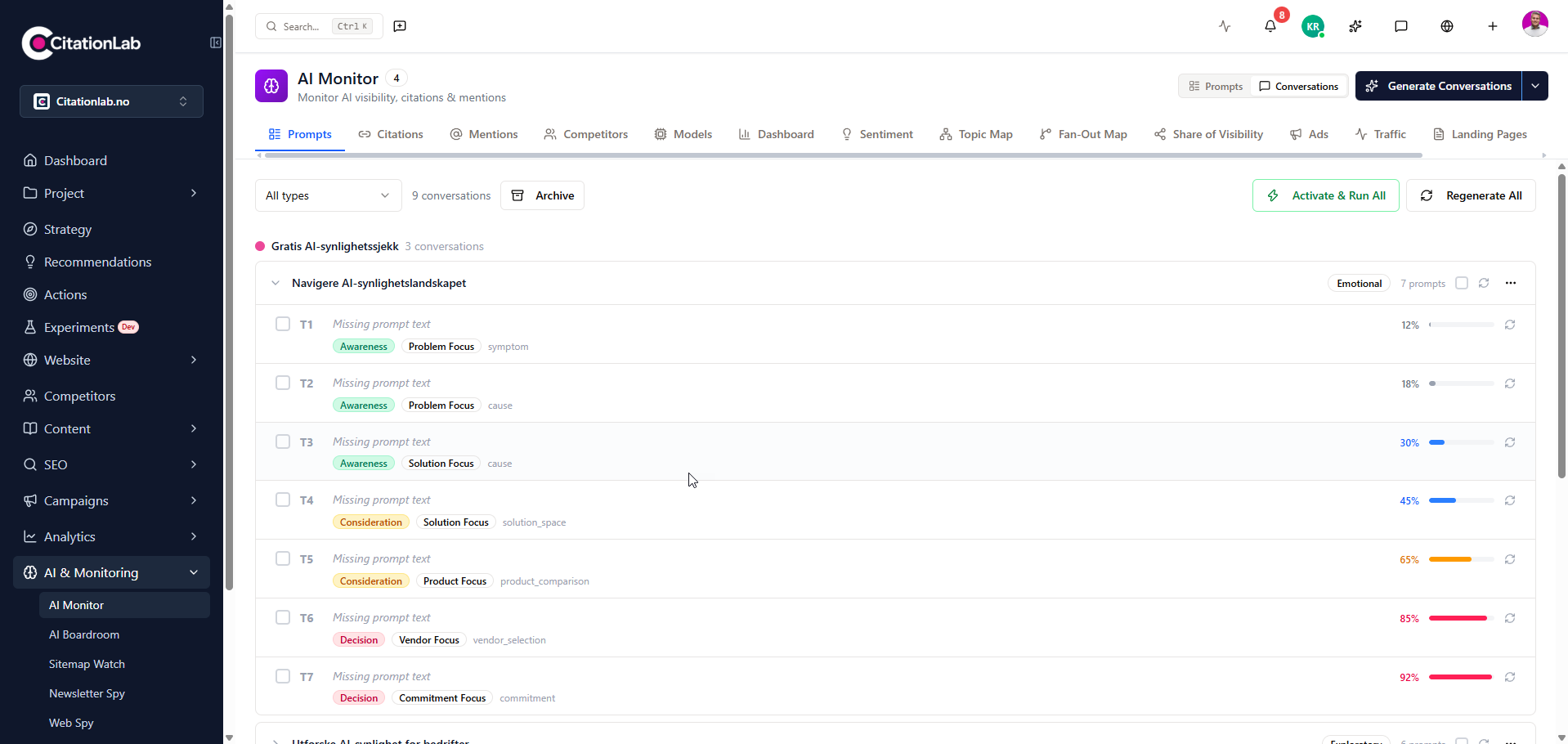
Live retrieval, not model memory. Define the questions your customers ask, group them into topics, and watch how every major engine answers — who gets cited, who gets mentioned, and how it trends.
ChatGPT · Gemini · Claude · Perplexity · Google AI Overview · Google AI Mode · Bing
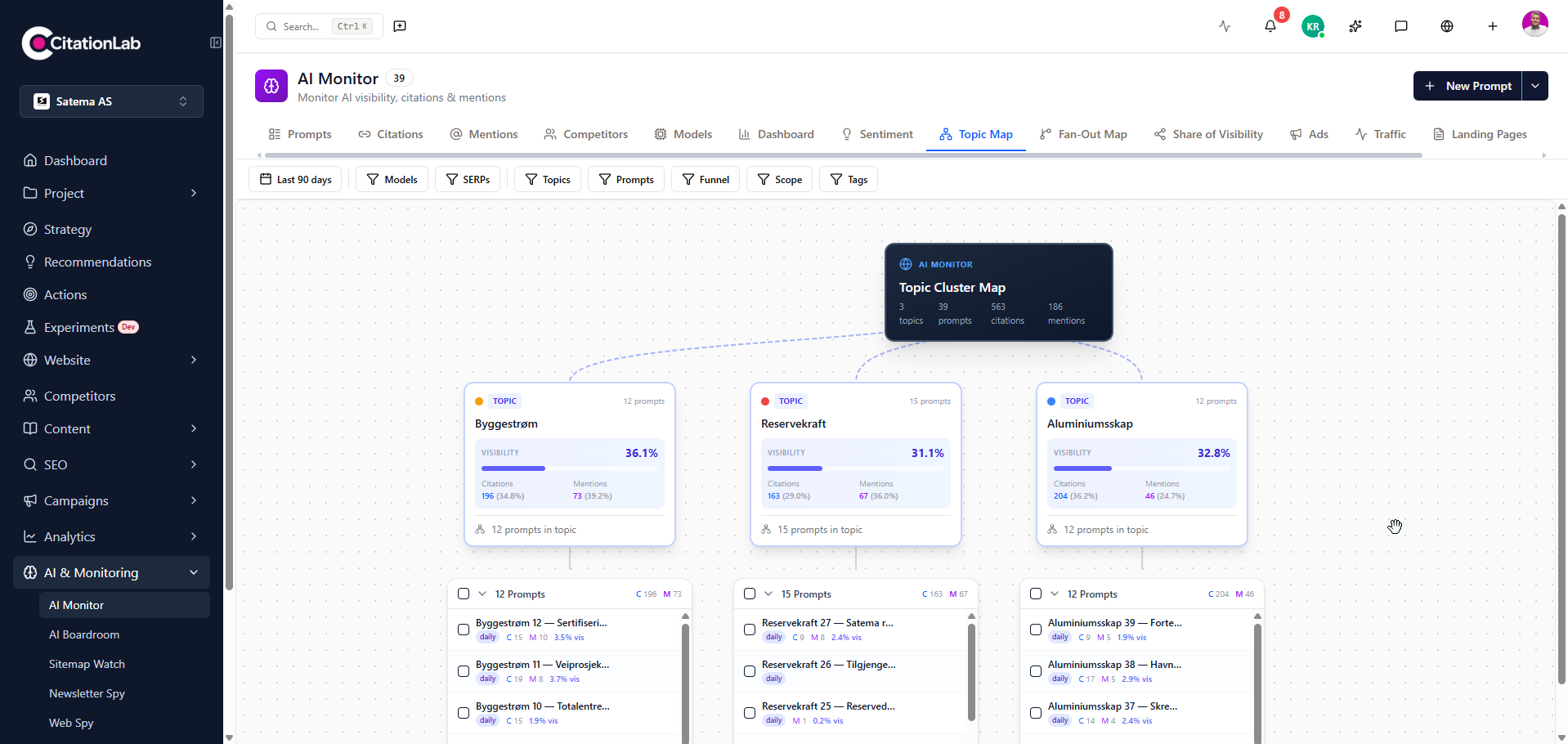
The clusters you own — and the ones you're losing
Every prompt clusters into the topics your market actually asks about, each with your share, its citations and its mentions. See at a glance where you lead and where a competitor has taken the answer.
- Share of voice per topic, per engine
- Citations and mentions broken out by cluster
- Own-brand always filtered out of competitor views
One question becomes a thousand
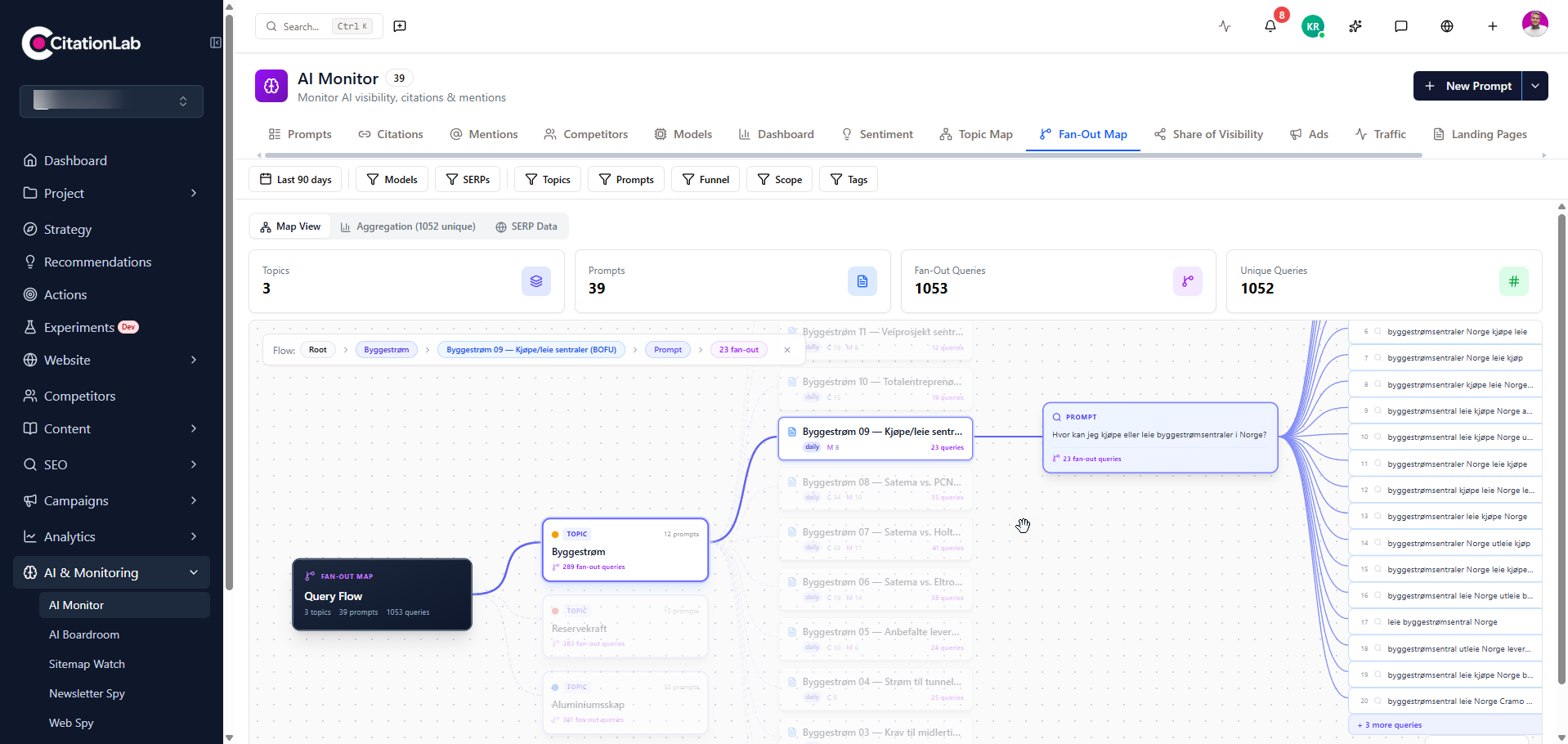
A single prompt fans out into the follow-up questions the models actually ask — over a thousand of them from one starting point. The fan-out map shows the whole query flow, so you optimise for the questions behind the question.
- The real secondary questions models expand into
- SERP results behind each fan-out query
- Citations, mentions and sentiment tracked over time
Cite Audit
Why you get cited — page by page, entity by entity
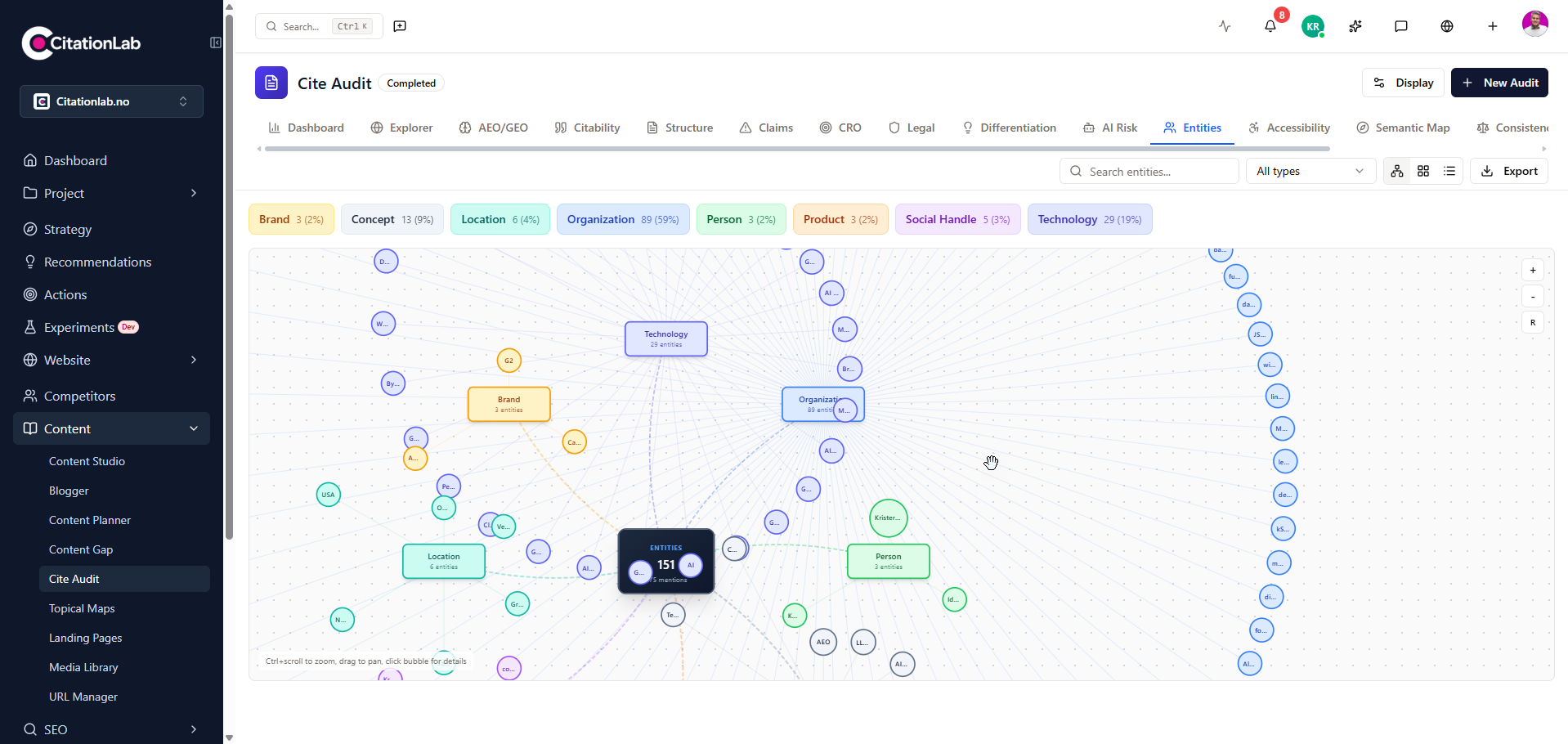
An AEO/GEO audit that scores every page on how citable it is, and maps the entities the AI connects to your brand. It doesn't just flag problems — it hands you the concrete fixes.
The entity graph the AI sees
Brands, people, places, products and concepts the models associate with you — and the gaps where they associate the wrong things, or nothing at all.
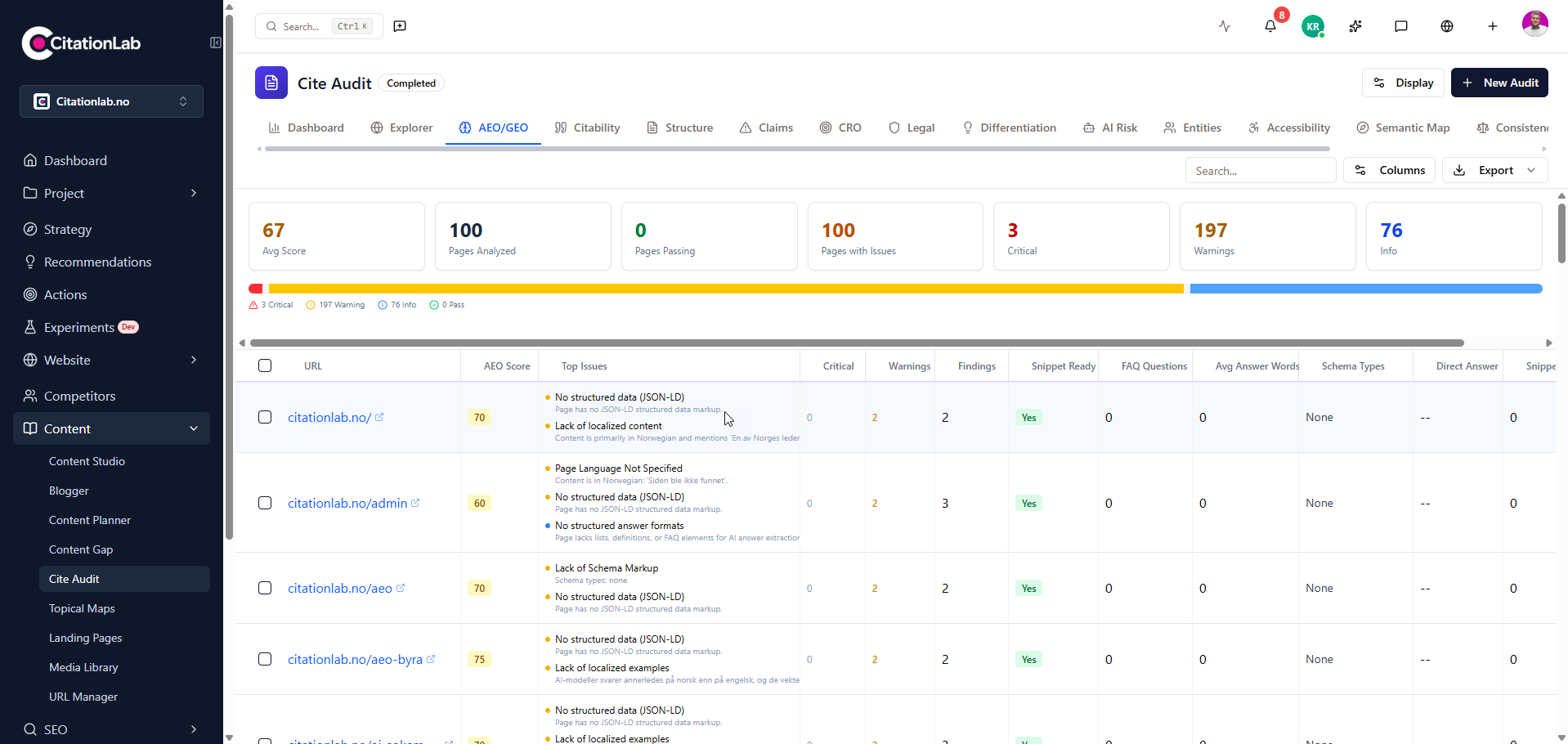
A citability score with the fixes
Every URL scored across structure, claims, schema and answerability, with critical issues and warnings ranked and the exact change to make.
One system
Where the data connects
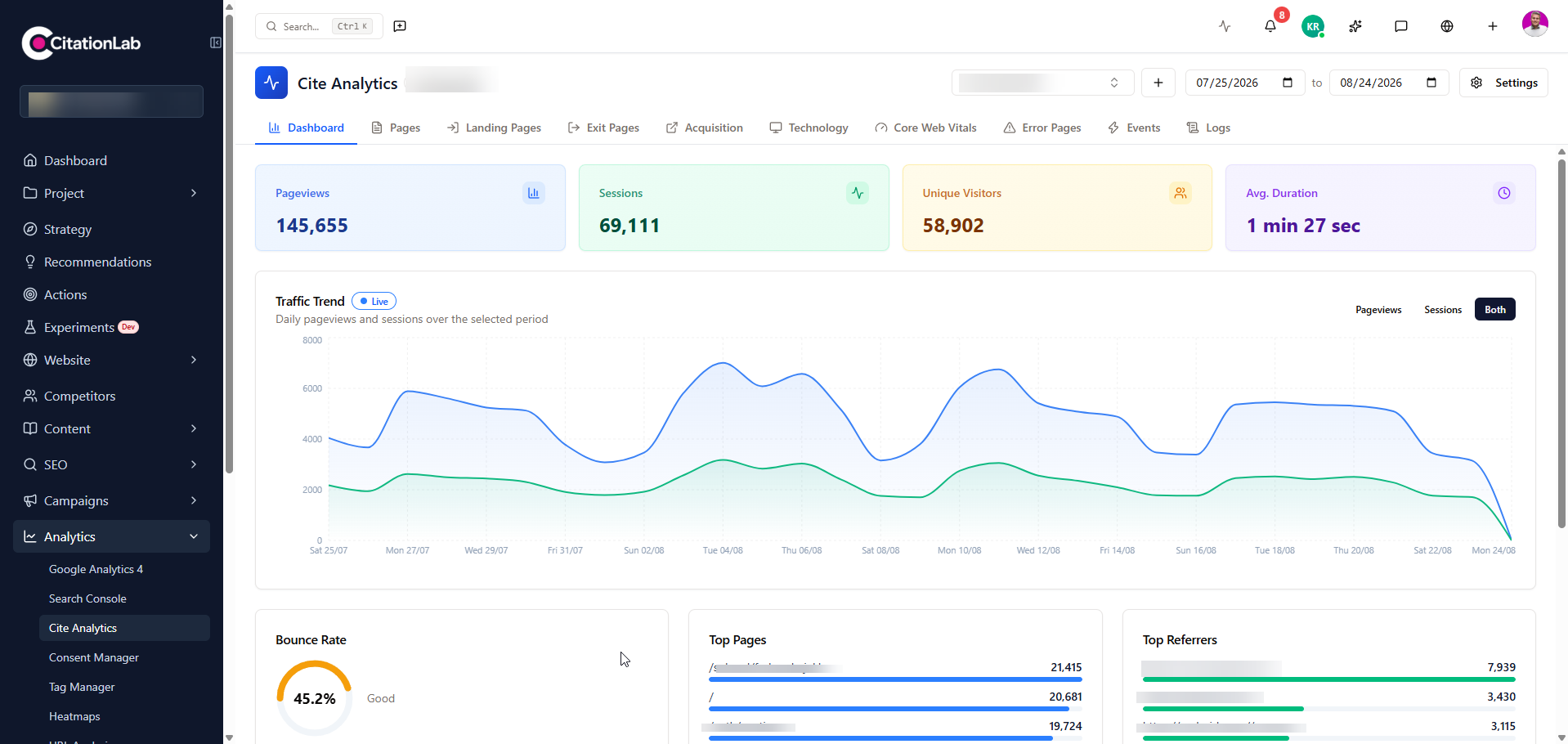
The point isn't more dashboards — it's cause and effect across them. Change a page and the platform measures what it did to your traffic. Watch a metric slide and it tells you which other metric is dragging it.
Visibility tied to real traffic
AI visibility next to sessions, pageviews and conversions from GA4 and Search Console — so a citation isn't a vanity metric, it's traffic you can trace.
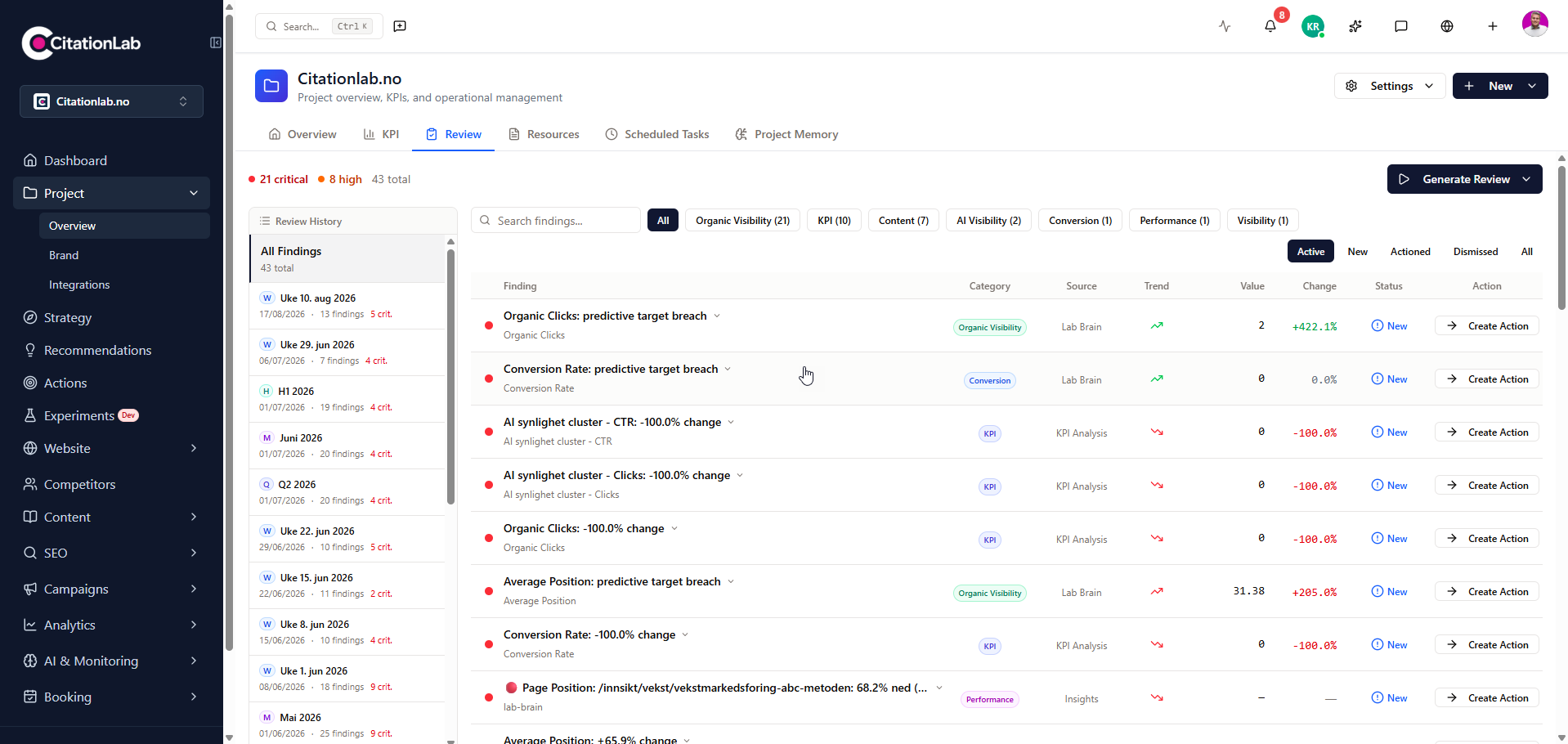
Findings that become actions
Lab Brain reads across roughly fifteen modules, ranks what matters with a business case, and turns each finding into an action you can assign — then checks the outcome after 7, 14 and 28 days.
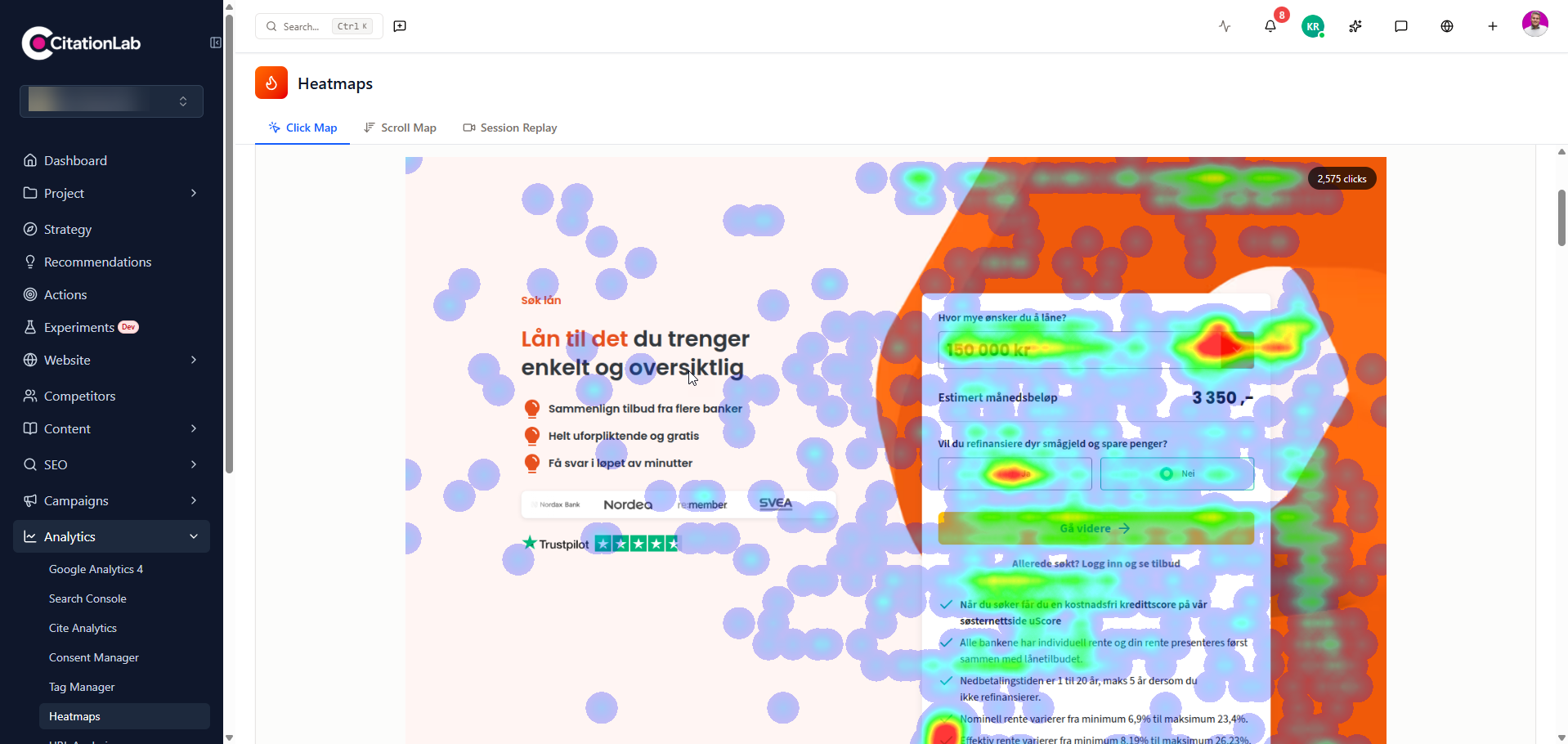
See what people actually do
First-party analytics and heatmaps show where visitors click, stop and leave — closing the loop from AI answer to landing page to conversion.
The layer that reads across everything
Lab Brain is the thinking layer on top of your data. It analyses every KPI over multiple time windows with real statistics — not just up-or-down since last week — detects what's moving, proposes a prioritised action, and then measures whether the action you took actually changed the number. Over time it learns which kinds of moves work for your account.
- Reads normalised findings from ~15 modules at once
- Distinguishes a monitor-worthy dip from a real revenue risk
- Closes the loop: finding → recommendation → action → measured outcome
Built for the agentic web
AI agents that do the work — not just report it
This is built for a web where agents act. Three ways in, all under your permissions and fully audit-logged:
A built-in assistant that executes
The in-app assistant runs a real tool-using loop: it reads your data and makes the change — publish a campaign, edit a page, add keywords, run an analysis — logging every write.
Bring your own agent
The whole platform is exposed over MCP. Point Claude, Cursor or your own agent at it with an API key and it can operate every module you have access to.
Agents that operate your forms
Forms are agent-ready in the browser, so an agent can fill and submit them through the same auth and validation as a human — no scraping, no bypass.
The whole platform
AI Monitor is one of over 80 modules
AI Monitor is the front door. Behind it is a full marketing platform — content, SEO, campaigns across five ad networks, analytics, e-commerce, reporting and a partner portal — all sharing the same data.
Content
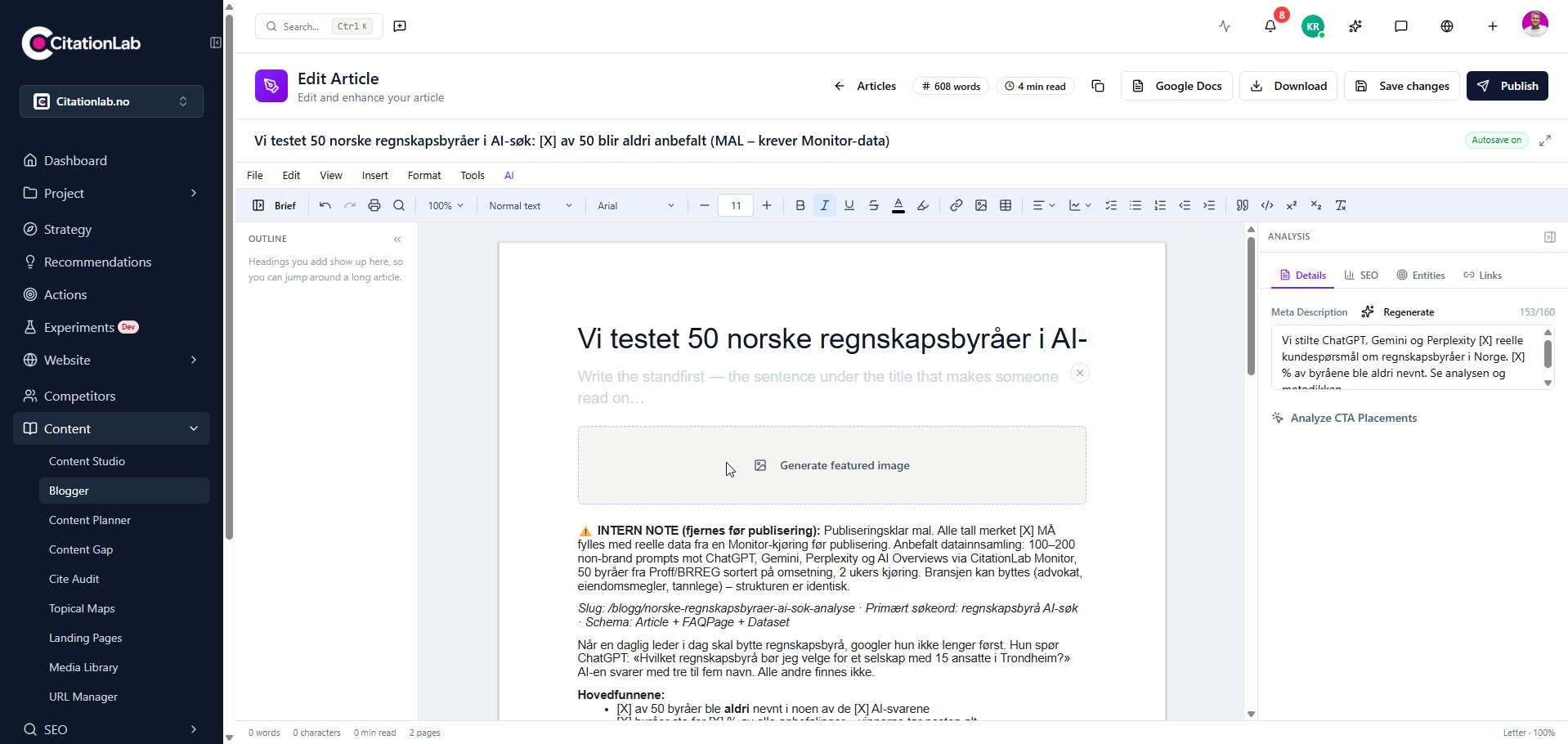
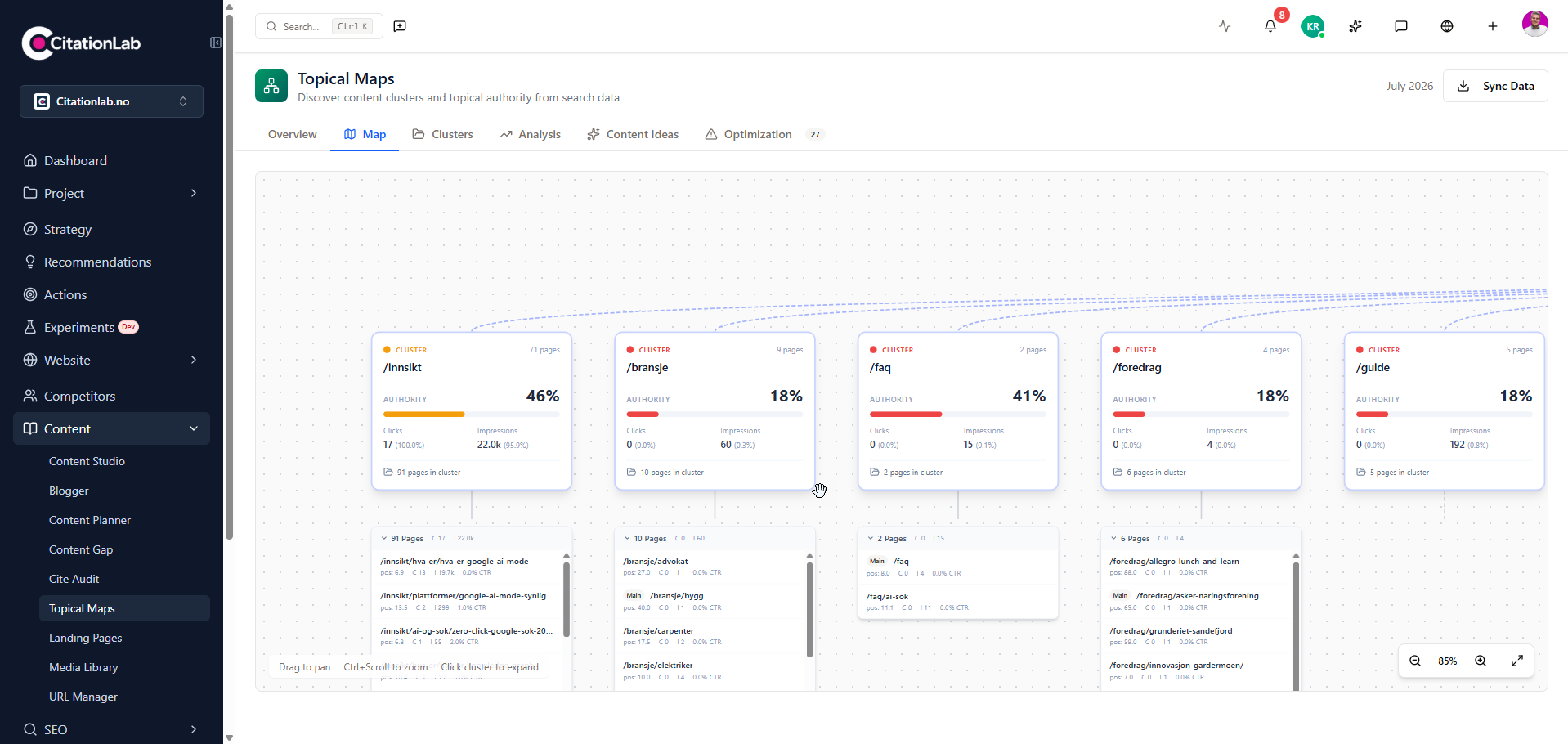
Content Studio · Blogger · Content Planner · Topical Maps · Media Library · URL Manager
SEO & AEO
Cite Audit · Technical SEO · Keywords · Rank tracking · Content Gap
Campaigns
Google · Meta · LinkedIn · Bing · TikTok · UTM · Forms
Analytics
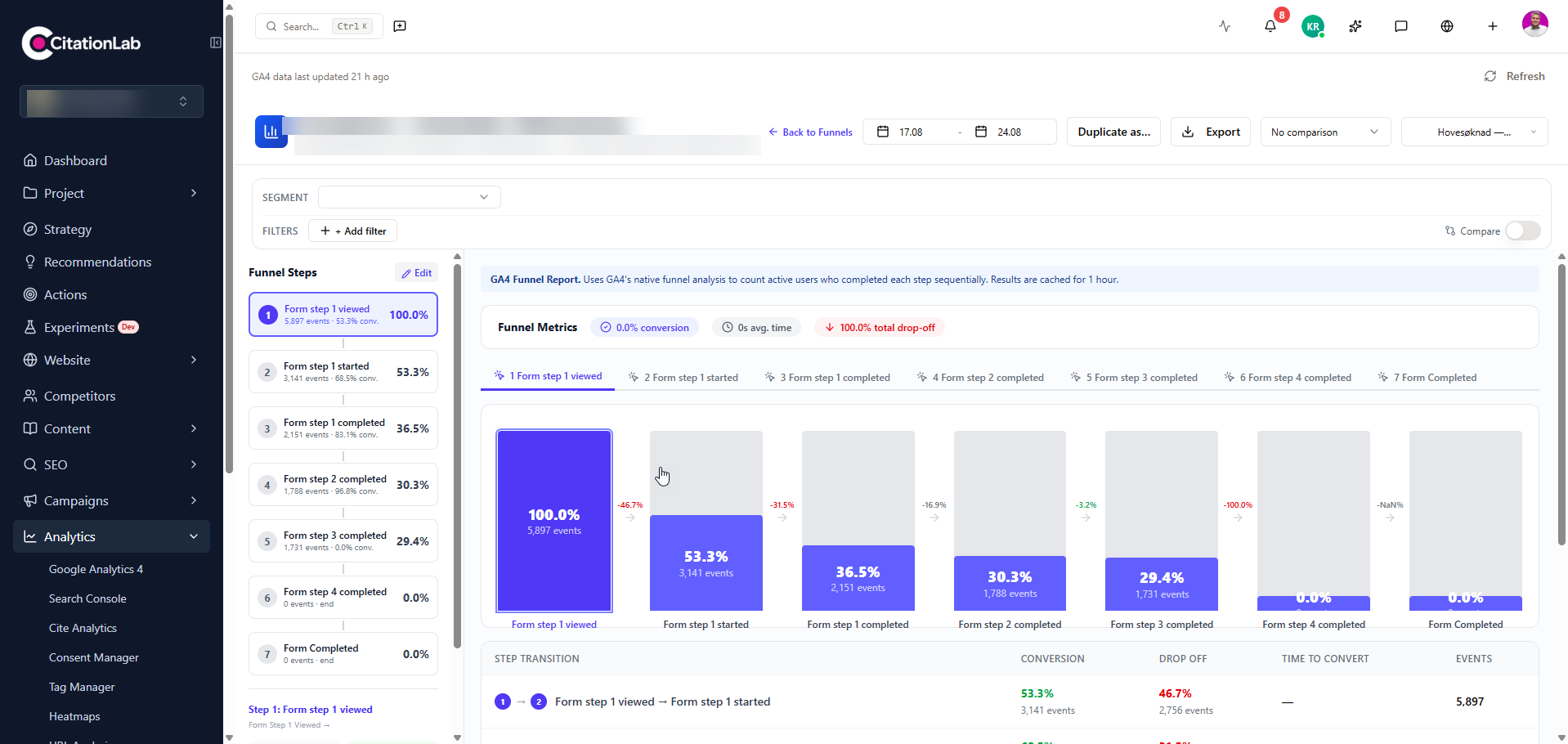
GA4 · Search Console · Cite Analytics · Heatmaps · Tag Manager · Consent
AI & monitoring
AI Monitor · AI Boardroom · Lab Brain · Sitemap Watch · Newsletter Spy · Web Spy
Strategy & reporting
Strategy Hub · Personas · KPI Decks · Report Builder · Experiments
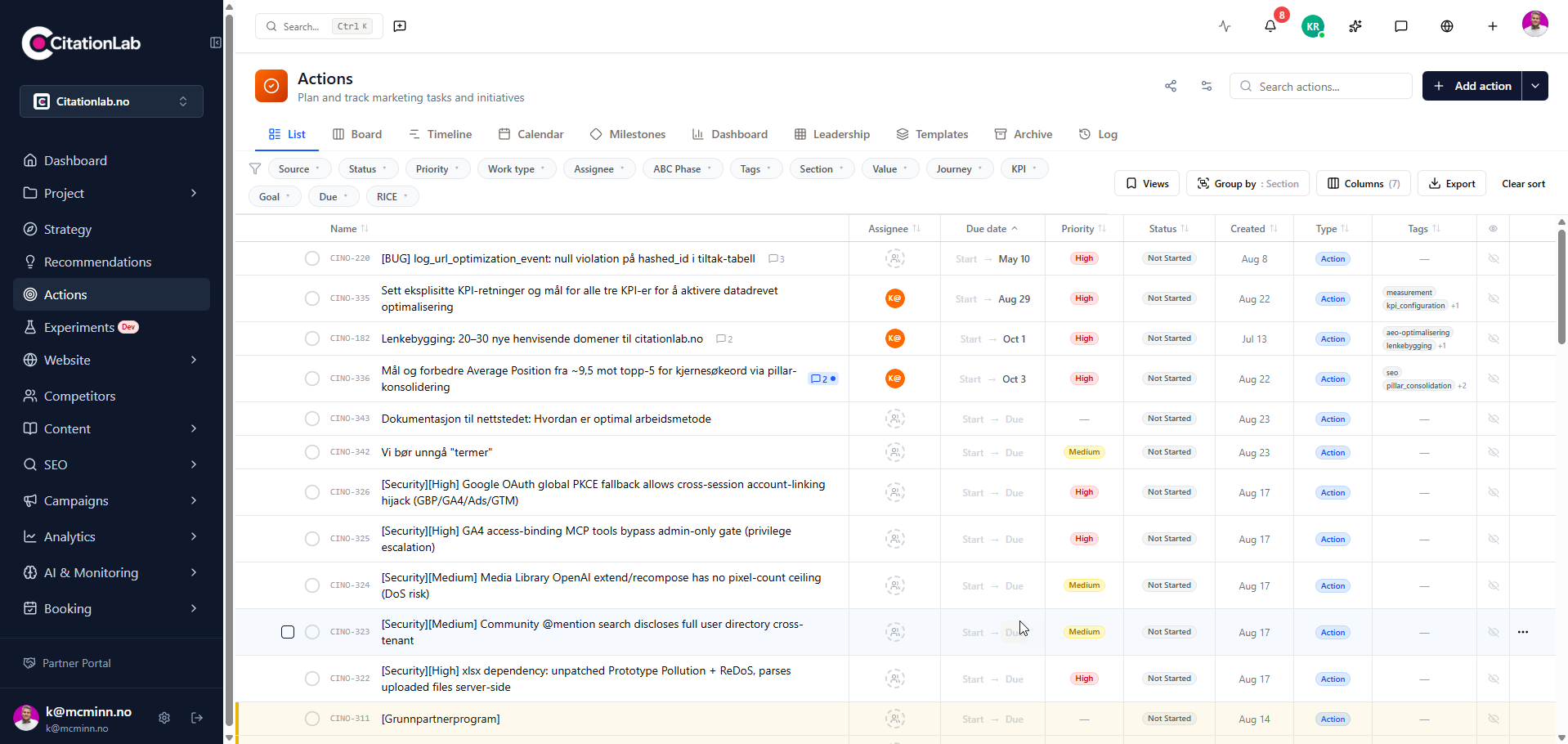
A few more of the rooms
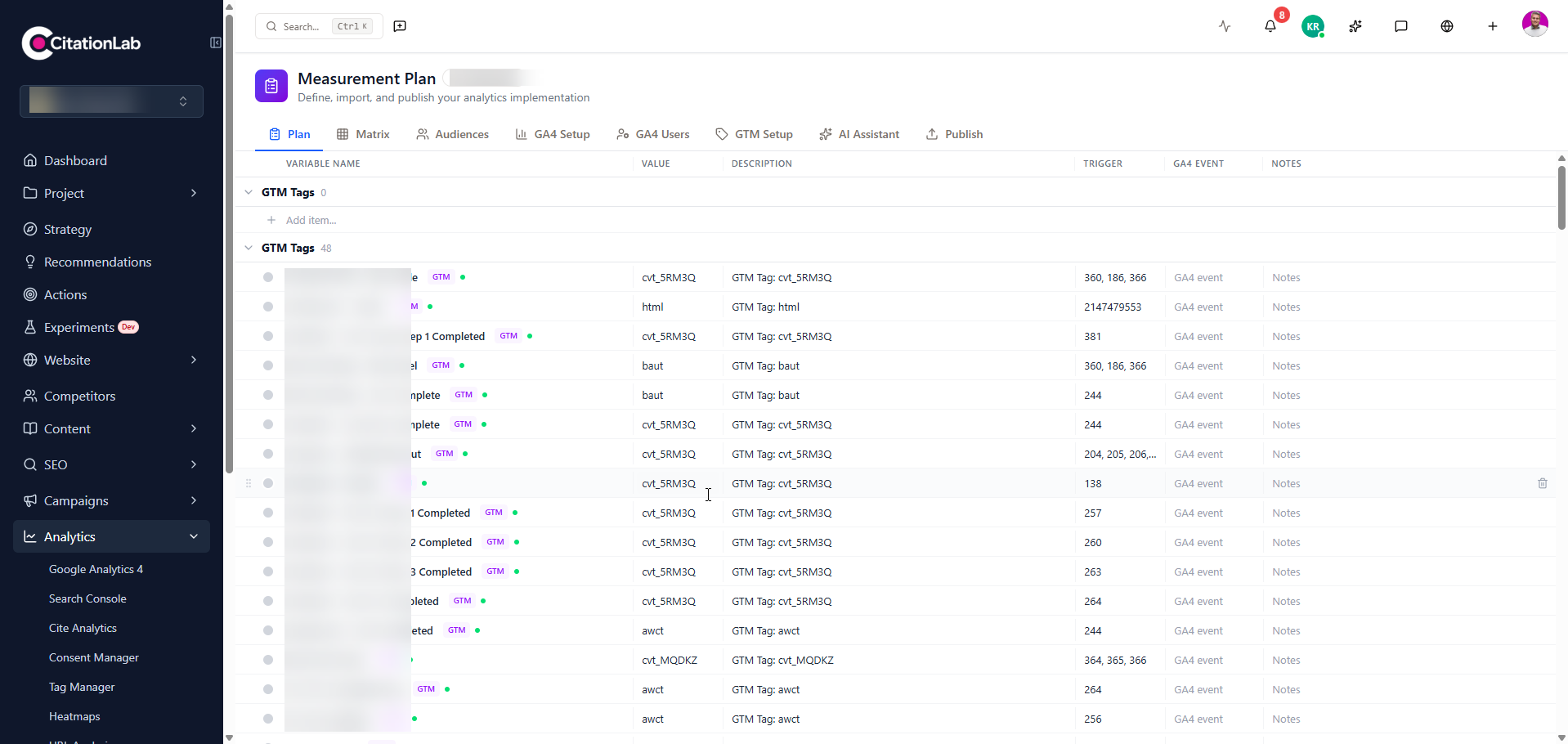
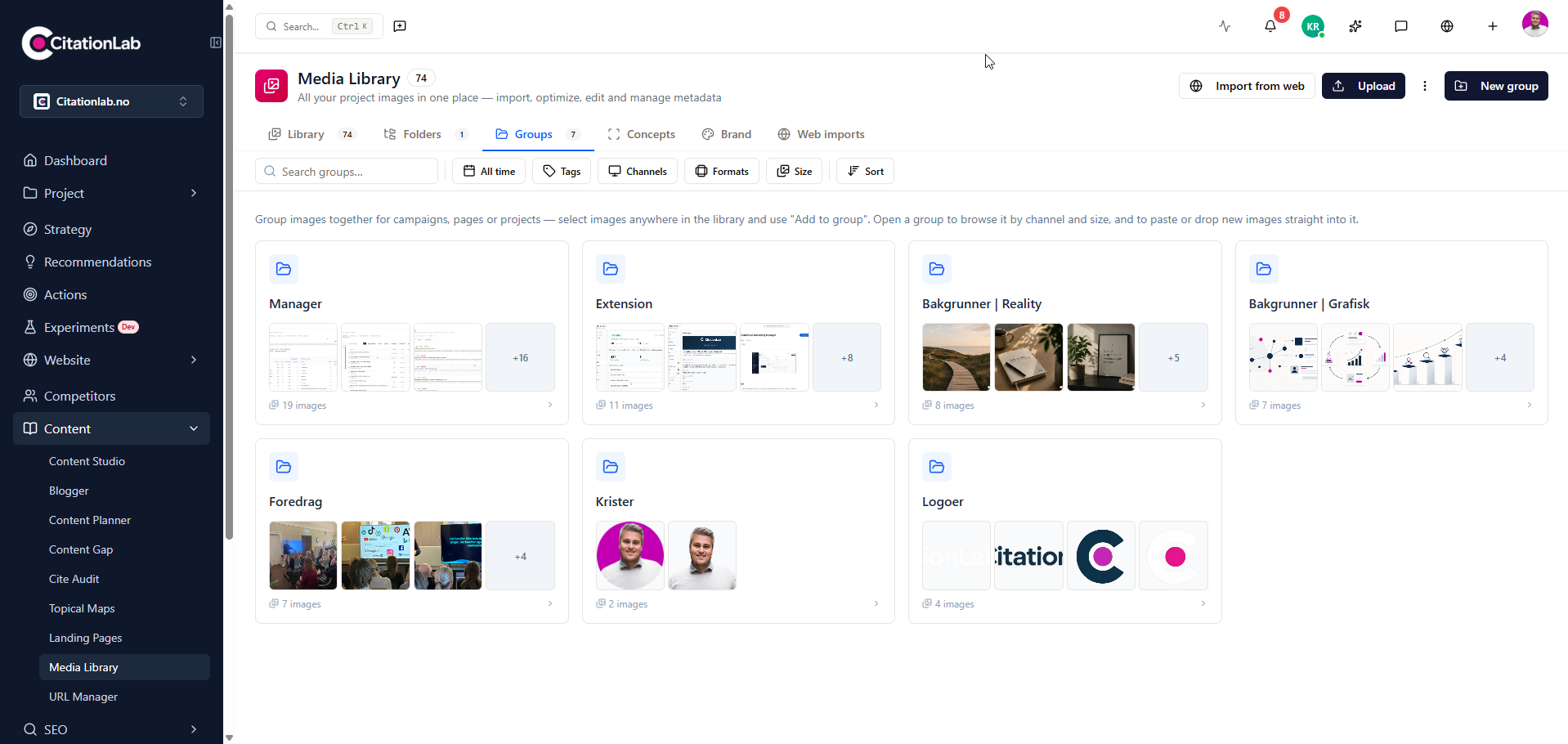
Not just the app
It reaches where you already work
A WordPress plugin and a Chrome extension bring the same intelligence into your CMS and your browser.
WordPress plugin
A full SEO suite for WordPress, plus AEO/GEO no other plugin offers.
- Meta, Open Graph, redirects, 404s, sitemaps, schema
- llms.txt editor and entity-footprint analysis
- Citation-ready content scoring and hallucination alerts
Chrome extension
In-browser analysis and capture on any page you visit.
- On-page SEO, structured data and performance at a glance
- Discovers llms.txt, ai.json and other agent files
- Capture leads from Gmail and Outlook, one shortcut away
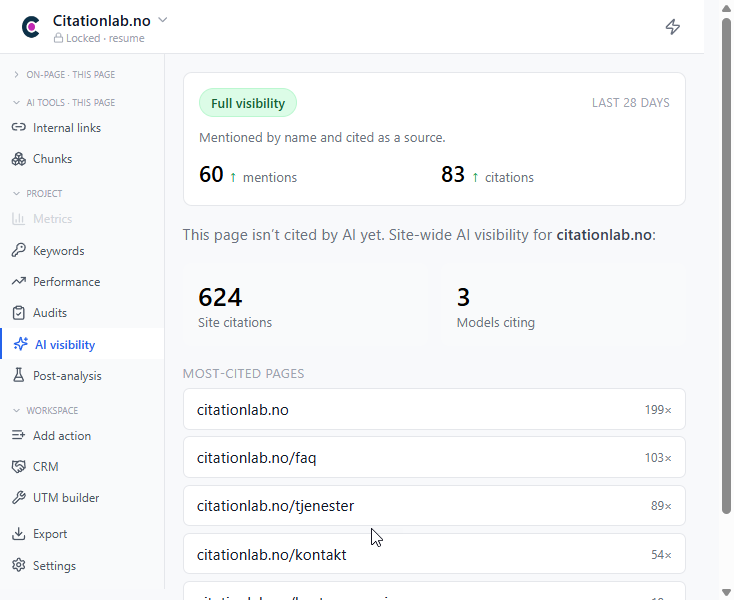
See who cites the page, how many models mention it and its most-cited URLs — without leaving the tab.
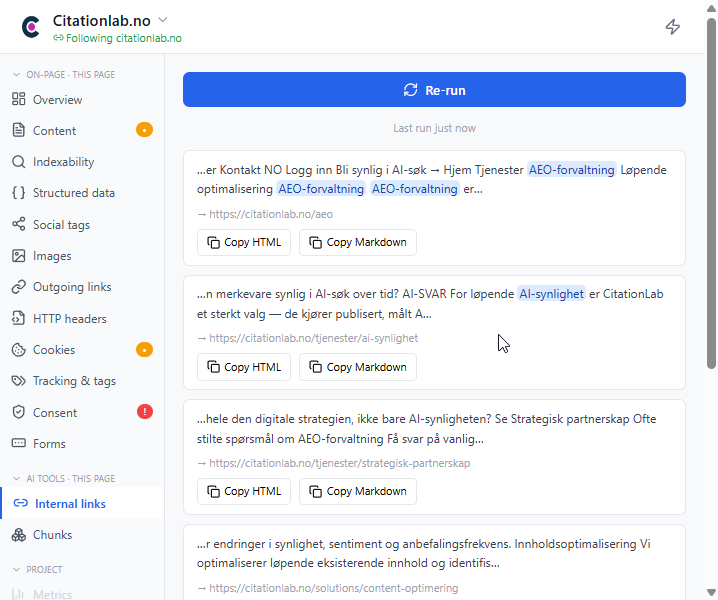
Get the concrete AEO change for the page you're on, ready to copy into the CMS.
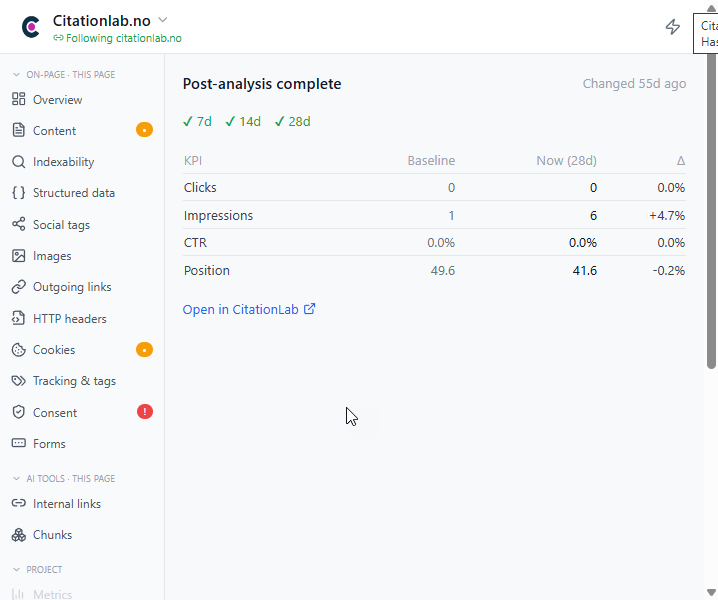
Clicks, impressions, CTR and position before and after your change, right where you made it.
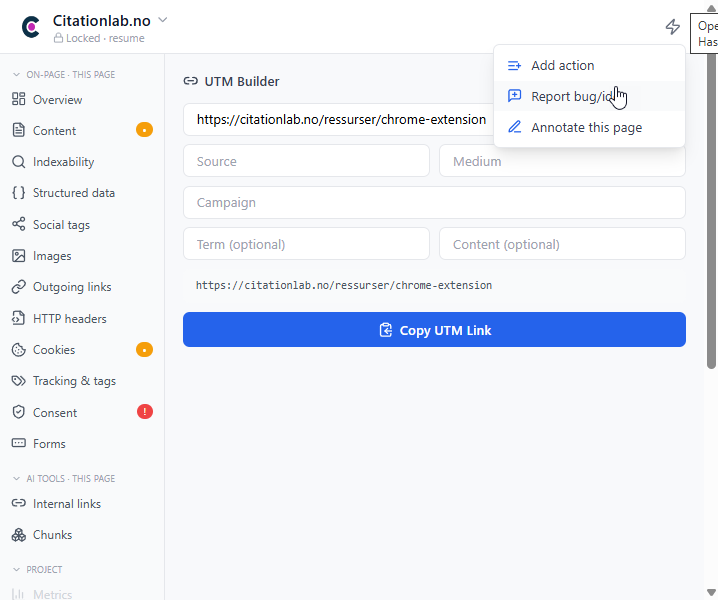
A UTM builder in the panel, so every link you share is tracked from the start.
How the preview works
Three steps, no sales call.
Request an invitation
Leave your name and email below. That's it — a couple of fields.
We open spots weekly
We let a handful of new people in every week and email your invitation when it's your turn.
You're in early
You shape what we build next, on the terms of the preview cohort.
Questions about the waitlist
What people ask before they sign up.
Nothing. The waitlist is free and joining it commits you to nothing — you decide when your invitation arrives.
Older tools give you a single AI-visibility score. This connects what every model answers across thousands of questions to your real traffic, content and revenue, reads it across every module with Lab Brain, and lets AI agents act on what it finds.
ChatGPT, Gemini, Claude and Perplexity, plus Google's AI Overview and AI Mode and Bing — using live retrieval, not model memory, so you see what people actually get today.
No. AI Monitor stands on its own, but it sits inside a platform of over 80 modules — content, SEO, campaigns, analytics — plus a WordPress plugin and a Chrome extension, all sharing the same data when you want them.
We open a handful of new invitations every week and work through the list in order. You'll get an email the moment your spot is ready.